Dust
In Delhi, dust can cut output by about 0.3–0.6% for each day panels go uncleaned. It adds up fast.
Source: Delhi field study (EU PVSEC), via pv-magazine India.
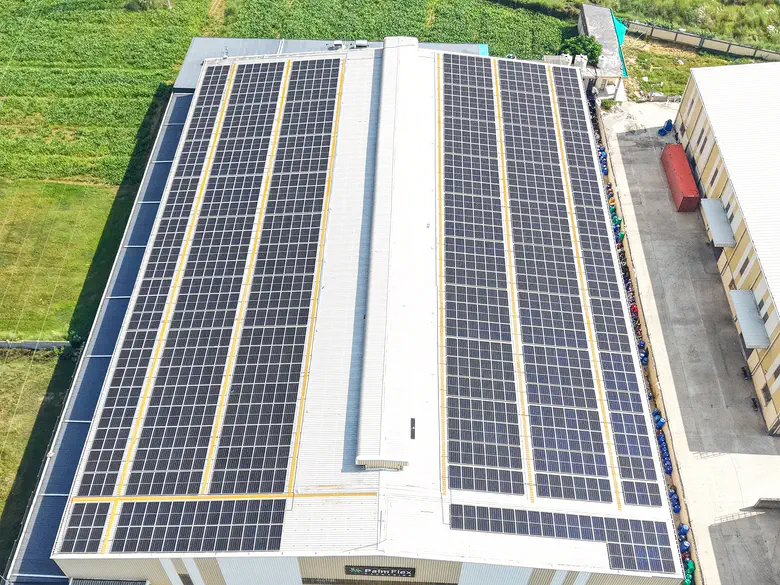
Solar EPC Solutions Across India
Own it for the biggest long-term saving. Or we invest, and you pay only for the units it makes. Either way, we build it and can look after it.
I'm looking for solar for:
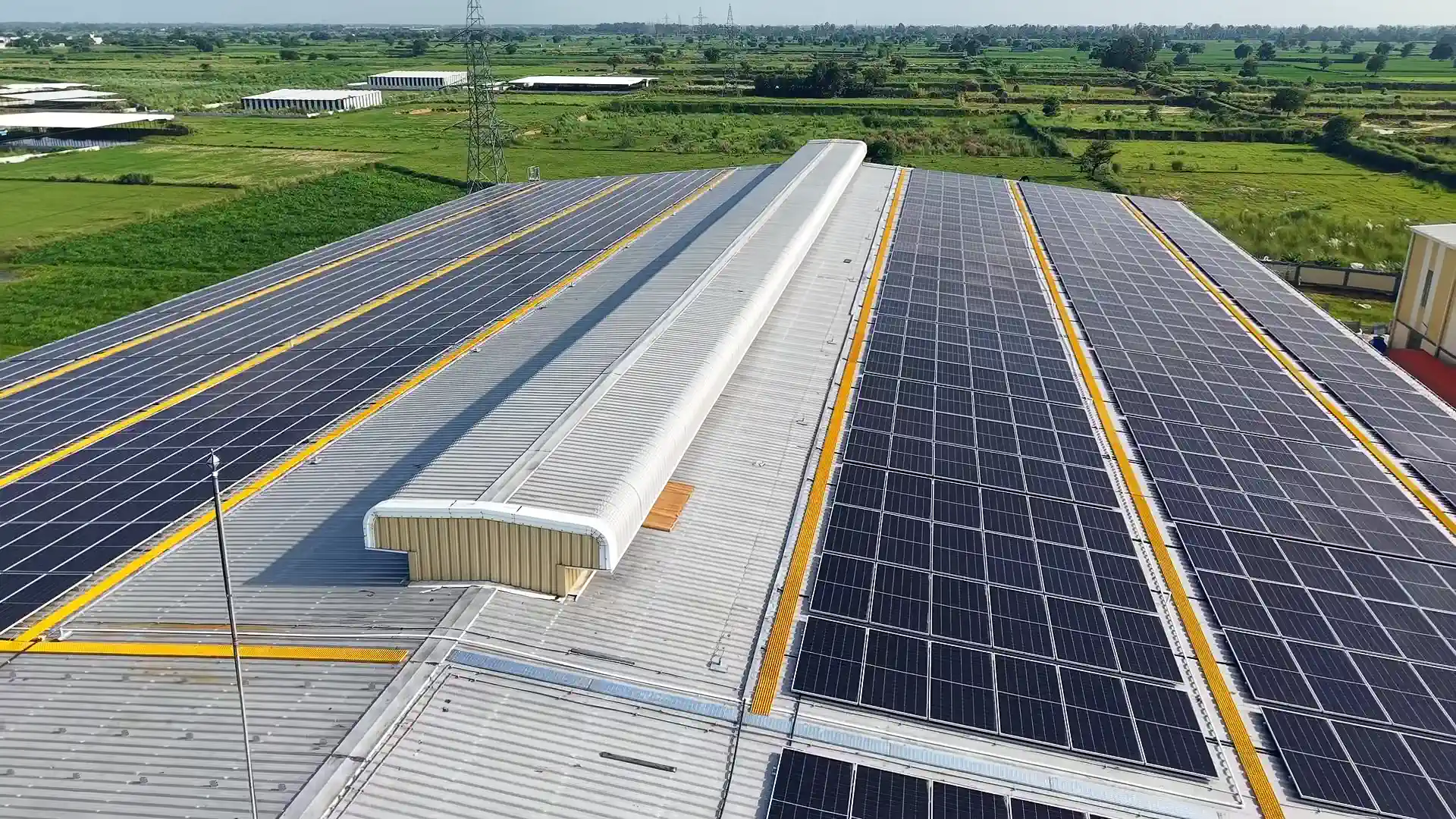
Drone photo of Palmflex Packaging, a client rooftop plant
Trusted by manufacturers, institutions and businesses






Same sun. Two ways to pay.
You can buy the plant and own it. Or we pay for it, and you pay only for the units it makes. Both cut your bill. Here is how they differ.
| Suggested for you OPEX We invest. You pay for the power. Pay per unit () Also called or | Suggested for you CAPEX You invest. You keep the savings (after upkeep). Buy & own () | |
|---|---|---|
| Upfront | No investment in the plant. | About ₹40,000–55,000 per + GST for business roofs (typical). |
| Monthly | A set rate per solar , below your grid rate. | No charge per solar unit. You pay for upkeep (care plan) and insurance. |
| Owner | Dexter. | You, from day one. |
| Upkeep | Usually included in pay-per-unit contracts. | A care plan (AMC), or your own team. |
| Best for | Keeping your cash. Needs a roof you'll use 15+ years. | Biggest savings, plus a possible tax benefit. Homes and housing societies (subsidy). |
| Contract length | Typically 15–25 years. | No long contract. Only the care plan you choose. |
| Tax benefit | No for you, because you don't own the plant. | Businesses that own the plant may be able to claim accelerated depreciation (40% under the earlier rules; ask your CA). |
| How much you save | Less per unit, but from day one with no investment in the plant. Typically 10–30% off the grid rate on every solar unit. | Usually the most over 25 years (estimate). Money back in about 5–6 years for business roofs (estimate). |
| Plant size | Usually from about 50–100 kW. | Any size, from a 3 kW home. |
| Warranties | The plant owner handles warranty claims during the contract. | Panels: typically 25–30 years on performance. Inverters: typically 5–10 years. |
| Many banks offer loans for rooftop solar. |
Your lease ends in a few years, or your roof needs major repair soon. A long contract needs a roof that stays. Tell us first.
Cash is tight, or your business can't use depreciation. Paying per unit may then be the better deal.
Answer the questions to see which way to pay usually suits a business like yours.
Not sure? We'll price both for your site.
Savings calculator
Enter your monthly bill. We compare both ways to pay, side by side. Every assumption is shown below, and you can change it.
Solar cuts: the units you buy.
It doesn't cut: your fixed monthly charge.
These figures are approximate calculations and do not guarantee any specific result.
Your average month. A rough number is fine.
Gives a sharper result. You'll find it on your bill as kWh or .
Set automatically from your bill. You can change it.
It's on your bill. Your plant usually can't be bigger than this.
The subsidy allows up to 3 kW per home.
Leave blank if you don't know. We'll check it at the survey.
Source from a public source · Market market typical, not a Dexter quote · Ours our assumption
HERC rates for FY2025-26, kept the same for FY2026-27. Electricity duty (about ₹0.10 a unit), municipal tax (about ₹0.05) and fuel surcharge are extra. Check your latest bill. Businesses are billed in kVAh, so a poor power factor raises the bill.
Want to keep your cash? → Pay per unit. Want the most savings over time? → Buy & own.
Your power
Plant size is counted in . Your bill counts units (1 unit = 1 kWh). In Gurugram, each kW of solar makes about 4 units a day on average, or about 1,400–1,500 units a year.
For a 370 kW plant · Change size
Heavy fog or smog days can make much less.
A 100 kW factory roof makes about 1.4–1.5 lakh units a year. At ₹7.10 a unit, that's about ₹10 lakh of grid power a year.
These figures are approximate calculations and do not guarantee any specific result.
Your estimate uses a full-year average, so it already includes fog, smog, monsoon cloud and the slow yearly loss of panel output (typically under 1% a year).
Get my free savings reportCare & maintenance ()
A solar plant is like a car. It can run for 25 years, but not on its own.
Dust, loose parts and silent faults quietly cut what your plant makes. You don't see it on the roof. You see it later, as a smaller saving.
In Delhi, dust can cut output by about 0.3–0.6% for each day panels go uncleaned. It adds up fast.
Source: Delhi field study (EU PVSEC), via pv-magazine India.
Solar fleets tracked by Raptor Maps (mostly in the US) lose about 5% of output to equipment issues. are a leading cause.
Basic alarms catch a full stop, not a weak .
Source: Raptor Maps 2025.
Loose or badly fitted connectors can overheat. Regular checks catch them early. How we handle fire risk →
Source: pv-magazine India, 2025.
Scheduled cleaning, monitoring and checks protect the units, and the savings, you paid for.
We also look after solar plants installed by other companies. The plant health check is free.
Book a free plant health check Get my free savings reportSafety
Four risks, and the standards for each.
Yes, when it is designed, built and checked properly. Here are the four main risks and the standards that apply to each. We’ll show how your plant meets each one at your site survey.
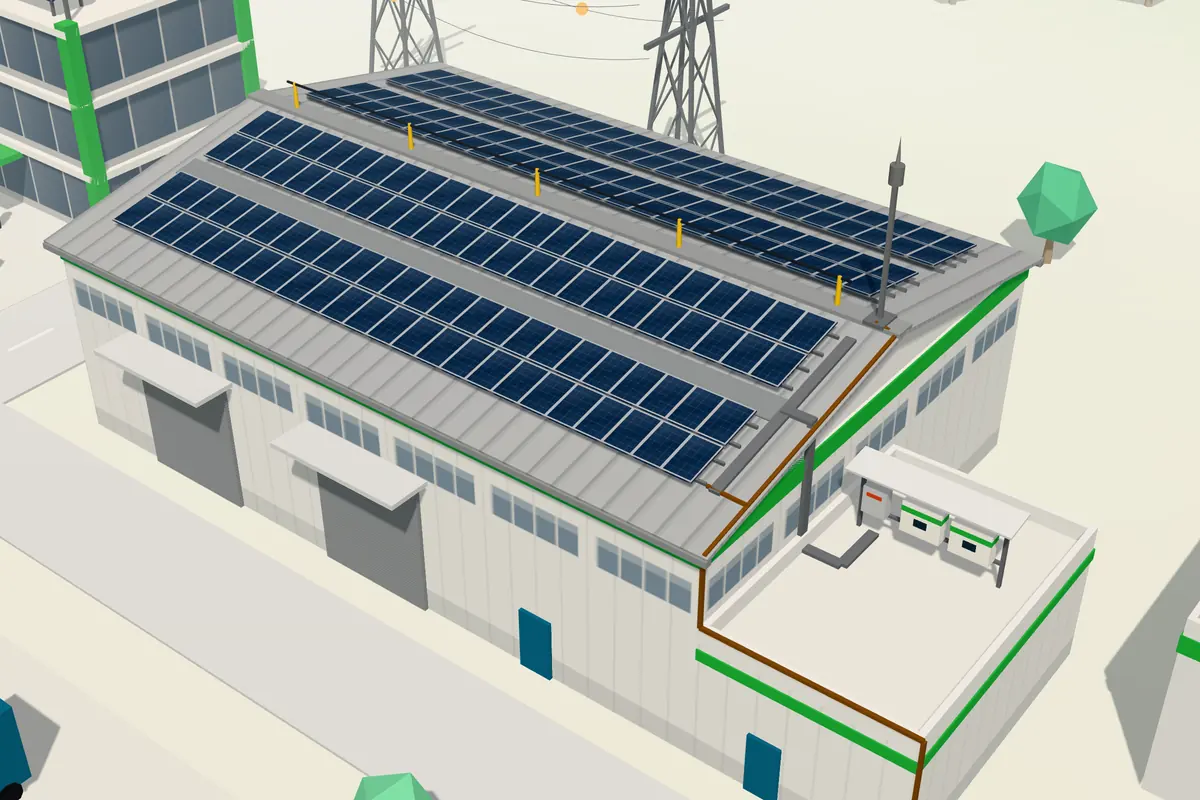
Risk: on industrial roofs, badly fitted connectors and loose wiring are a leading cause of solar fires (pv-magazine India, 2025).
Standards that apply: IS 17293:2020 / IEC 62930 (cables) · IS 16781 / IEC 62852 (connectors) · MNRE rooftop specification (IP65 outdoor isolators).
Risk: panels lifting in a storm; leaks; overloading an old roof.
Standards that apply: IS 875 (Part 3):2015, using the basic wind speed for our area · CEA Safety Regulations 2023 (walkways for solar plants).
Risk: stray current; lightning; power sent into grid lines during a cut.
Standards that apply: IS 16221-2 / IEC 62109-2 (inverter safety) · IS 16169 / IEC 62116 (anti-islanding) · IEC 61727 (grid connection) · IS 3043 (earthing) · IS/IEC 62305 (lightning protection).
Risk: poor panels that fail early or develop hot spots; an unsafe or unapproved grid connection.
Standards that apply: IS 14286 / IEC 61215 (panel quality) · IS/IEC 61730 (panel safety) · CEA Technical Standards for Connectivity of Distributed Generation (2013, amended 2019).
How we see AI in solar
AI won't make more sunshine. It helps your plant lose less, by spotting problems before your bill does.
We see a future where your plant looks after itself as far as it can: it warns early, books its own cleaning and shows savings in rupees. Our people still do the fixing; the software just tells them where to look, sooner.
In plain words, AI here means software that learns how your plant should perform and flags anything odd.
Tomorrow's units from the weather forecast, so a shortfall stands out at once.
An instant roof estimate from a satellite image of your address.
Each string can be compared with its neighbours and the forecast (needs string-level data).
Models that spot part failures weeks ahead, learned from many plants.
Clean when dust costs more than cleaning, using estimated dust loss and the rain forecast.
Dust sensors for exact cleaning timing.
Want to see what your own plant could save? Get my free savings report
Why Dexter
6 questions to ask any solar company, and our answers.
Ask every company you speak to the same questions. Good answers are specific and in writing. Here are ours.
Yes: buy & own, or pay per unit. So we can price both side by side for you.
See proof: Ways to pay →Yes. Your proposal shows expected units for each month and every assumption behind them.
See proof: Power →What we build
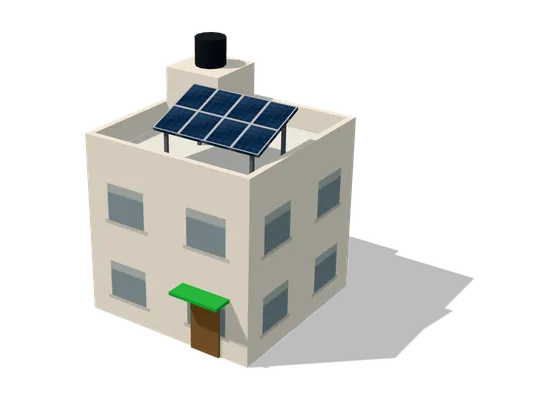
Neat rooftop systems for houses, villas and society common areas: lifts, water pumps, corridor lights and EV charging.
Usually suits: Buy & own (CAPEX).
See my savings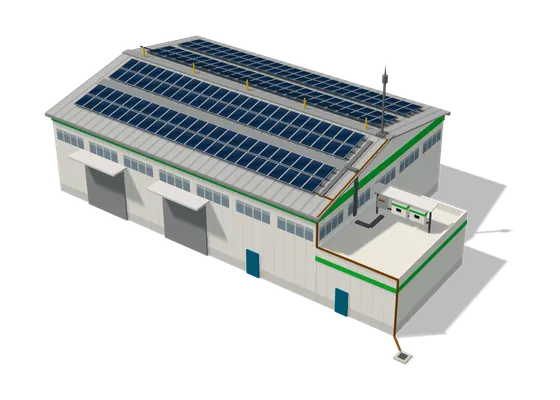
Rooftop plants for factories, warehouses, offices, schools and hospitals.
Usually suits: factories, both models; offices and shops with smaller roofs, buy & own; schools and hospitals, pay per unit.
See my savings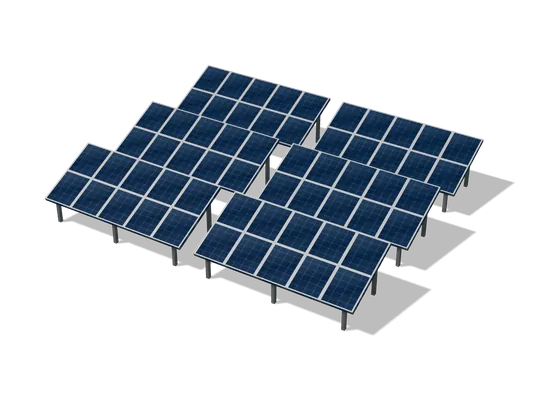
Larger plants on open land, from site study and design to grid connection.
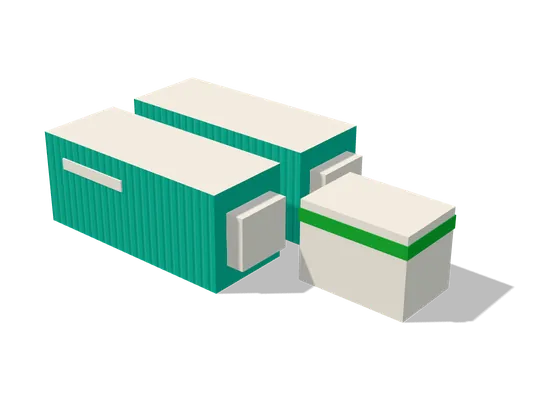
Store daytime solar for the evening, and keep selected loads running during power cuts.
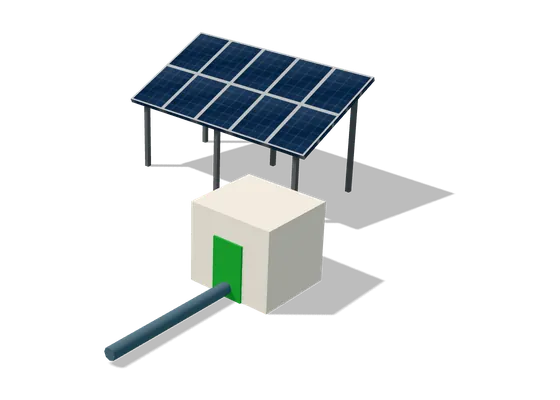
Pumps that run on sunlight: no diesel, no waiting for grid supply.
How it works
Five steps from your first call to switch-on.
An engineer visits and checks your roof, your bills and when you use power.
You get the plant size, expected units each month, both ways to pay, and every assumption.
The plant is registered with DHBVN (your power company) for net-metering, and the subsidy is filed for homes and societies.
The plant is installed, then inspected before it is connected to the grid.
Monitoring, cleaning and checks keep the plant making power. Ask what your care plan includes.
Questions
Still have a question?
No, and we won't claim that. Solar cuts the energy part of your bill, meaning the units you buy. The fixed monthly charge for your connection stays. The calculator shows how much of your bill solar can cut.
Yes. With pay per unit (OPEX), there's no investment in the plant. You pay a lower rate for each solar unit, typically 10–30% below the grid rate. If you buy the plant (CAPEX), business savings typically give your money back in about 5–6 years (estimate). Owners may be able to claim accelerated depreciation, so ask your CA which suits your books.
It's a fair worry. A good installer checks your roof's strength first, waterproofs every fixing point and leaves walkways so nobody steps on the roof covering.
Dust does cut output: about 0.3–0.6% for each day panels aren't cleaned. That's why cleaning is part of a good care plan: every few weeks, and more often in the October–November smog.
Panels still work under cloud, but they make less. An average winter day makes about 3.2–3.8 units per kW, against 4.8–5.4 on a summer day. Heavy fog or smog days can make much less. Your estimate uses a yearly average that already includes the lower months. Structures should be designed for local wind speeds as per IS 875.
A normal grid-connected plant stops sending power when the grid goes down. This safety rule, called anti-islanding, protects line workers repairing the grid. It does not make the panel-side DC cables safe; those stay live in daylight. If you need power during cuts, add a battery. If you run a diesel generator during cuts, solar with a battery can cut that too.
Your meter counts power both ways. Units you send to the grid are set off against units you take. In Haryana, net-metering covers rooftop plants up to 500 kW, and usually no bigger than your sanctioned load.
Pay-per-unit contracts are long because we invest the money, typically 15–25 years. Before you sign, you see in plain words: the term, any buy-out terms, and what happens if you move or sell.
Panels and inverters carry their makers' warranties: typically 25–30 years on panel performance and 5–10 years on inverters. On pay per unit, ask to see the step-in or transfer clause in writing before you sign. It says who runs the plant if the owner exits.
Any electrical system needs care. On industrial roofs, badly fitted connectors and loose wiring are a leading cause of solar fires. Panels and their cables stay live whenever there is daylight, so only trained people should open the DC side. See the safety section above.
It's a few steps: a net-metering application to DHBVN, a site inspection and net-meter fitting, and, for homes and societies, a subsidy claim on the PM Surya Ghar portal. Homes can get up to ₹78,000 under PM Surya Ghar. Housing societies can get ₹18,000 per kW for common areas (up to 3 kW per home, max 500 kW). Subsidised plants need DCR panels from a registered vendor. Businesses don't get a subsidy, but owners may be able to claim depreciation (ask your CA).
Yes. Many banks lend for rooftop solar.
It's an estimate, not a guarantee. Weather, tariffs and how you use power all change the result. Your estimate is written down, with every assumption shown.
Free savings report
Tell us your bill and your site. An engineer compares both ways to pay for you: own it, or pay per unit. You choose, or choose neither.
Don't like forms? WhatsApp us