
Rooftop solar · Across India
Rooftop solar panels in Gurgaon, for homes, businesses and institutions
Power bills keep rising. A rooftop solar plant turns the roof you already have into years of lower bills. We design it, install it, handle the paperwork and can look after it for you.
- Buy it, or pay per unit
- Net-metering paperwork handled
- Care & monitoring plans
Quick answer
How much does rooftop solar cost in Gurgaon?
It depends on the size of the plant and how you pay. If you buy the plant (CAPEX), business roofs typically cost about ₹40,000–55,000 per kW + GST, with money back in about 5–6 years (estimate), and homes can get up to ₹78,000 under PM Surya Ghar. If you pay per unit (OPEX), there is no investment in the plant, and each solar unit typically costs 10–30% less than the grid rate.
Dexter Energy, a solar EPC company in Gurugram, prices both ways for your roof after a free site survey. Estimate your savings.
Who it’s for
One rooftop plant, sized for how you use power
Every roof and every bill is different. We start from your electricity use and your roof, then size the plant and pick the way to pay that suits you.
Homes & housing societies
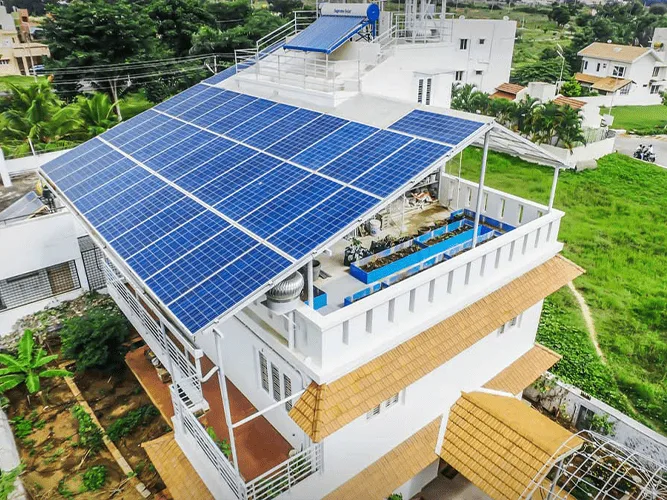
Residential rooftop solar
A residential solar rooftop system in Gurgaon cuts the units you buy from the grid for 25 years and more. Our systems are quick to install, need little upkeep and come with clear paperwork.- Subsidy under PM Surya Ghar: up to ₹78,000 for a home, and ₹18,000 per kW for society common areas.
- Subsidised plants use DCR panels from a registered vendor, as the scheme requires.
- We file the net-metering application with DHBVN and the subsidy claim for you.

Factories, warehouses, offices
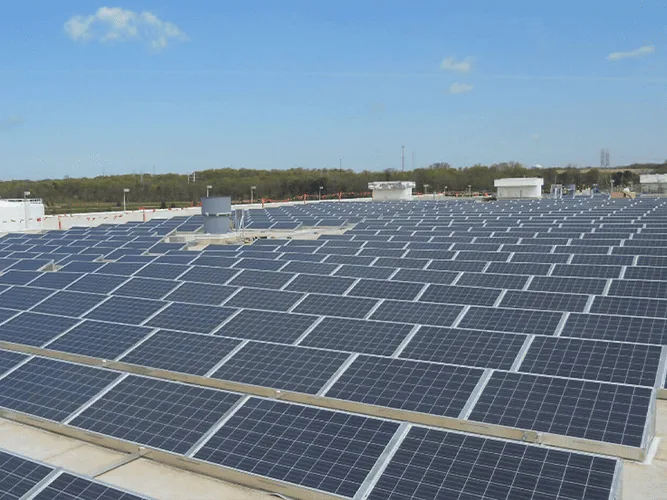
Commercial & industrial rooftops
For a business, a rooftop plant lowers the cost of every unit you use in the daytime. Buy the plant for the biggest long-term saving, or pay only for the units it makes, with no investment in the plant.- Both ways to pay priced side by side: buy & own (CAPEX) or pay per unit (OPEX).
- Business owners may be able to claim accelerated depreciation. Ask your CA.
- Structures designed for local wind loads, with walkways for safe cleaning.
Schools, colleges, hospitals
Institutions
Schools, colleges and hospitals run labs, lifts, lights and cooling all day. Rooftop solar covers much of that daytime load, so more of your budget goes to what matters.- Pay per unit often suits institutions: no capital spend, a fixed rate per solar unit.
- Battery backup available for selected loads such as labs or server rooms.
- Life-critical medical equipment stays on its certified UPS and generator.
How it works
From first call to switch-on
- 1
Site survey
An engineer checks your roof, your bills and when you use power. - 2
Design & proposal
Plant size, expected units each month and both ways to pay, in writing. - 3
Approvals
Net-metering with DHBVN, and the subsidy claim for homes and societies. - 4
Install & test
Installed by our team, then inspected before it connects to the grid. - 5
Care & monitoring
Cleaning, checks and monitoring keep the plant making power.
Questions
What do people ask about rooftop solar in Gurgaon?
Still have a question?
Talk to an engineerHow much power does a rooftop solar plant make in Gurgaon?
Should I buy the plant or pay per unit?
What subsidy can I get for rooftop solar?
How does net-metering work in Haryana?
Will the panels leak or damage my roof?
Free site survey
Find out what your roof can do
Tell us a little about your site. An engineer will call you, visit if needed, and price the plant both ways: own it, or pay per unit.- No obligation, no sales pressure.
- Every assumption in writing.
- Serving Pan India.