Rising electricity costs and growing sustainability pressures have made energy management a serious concern for large commercial buildings. Shopping malls, corporate offices, hospitals, hotels, factories, and IT parks consume massive amounts of power every day. This is where solar energy solutions for large commercial buildings step in as a practical, long-term answer.
Solar is no longer just an environmental statement. It is a financial decision, a brand value booster, and a future-proof strategy. With advancements in technology, government incentives, and falling equipment costs, commercial solar power systems have become accessible and highly profitable for large-scale users.
This guide explains everything decision-makers need to know, from system types and benefits to costs, installation challenges, and real-world performance.
Why Large Commercial Buildings Are Ideal for Solar Energy
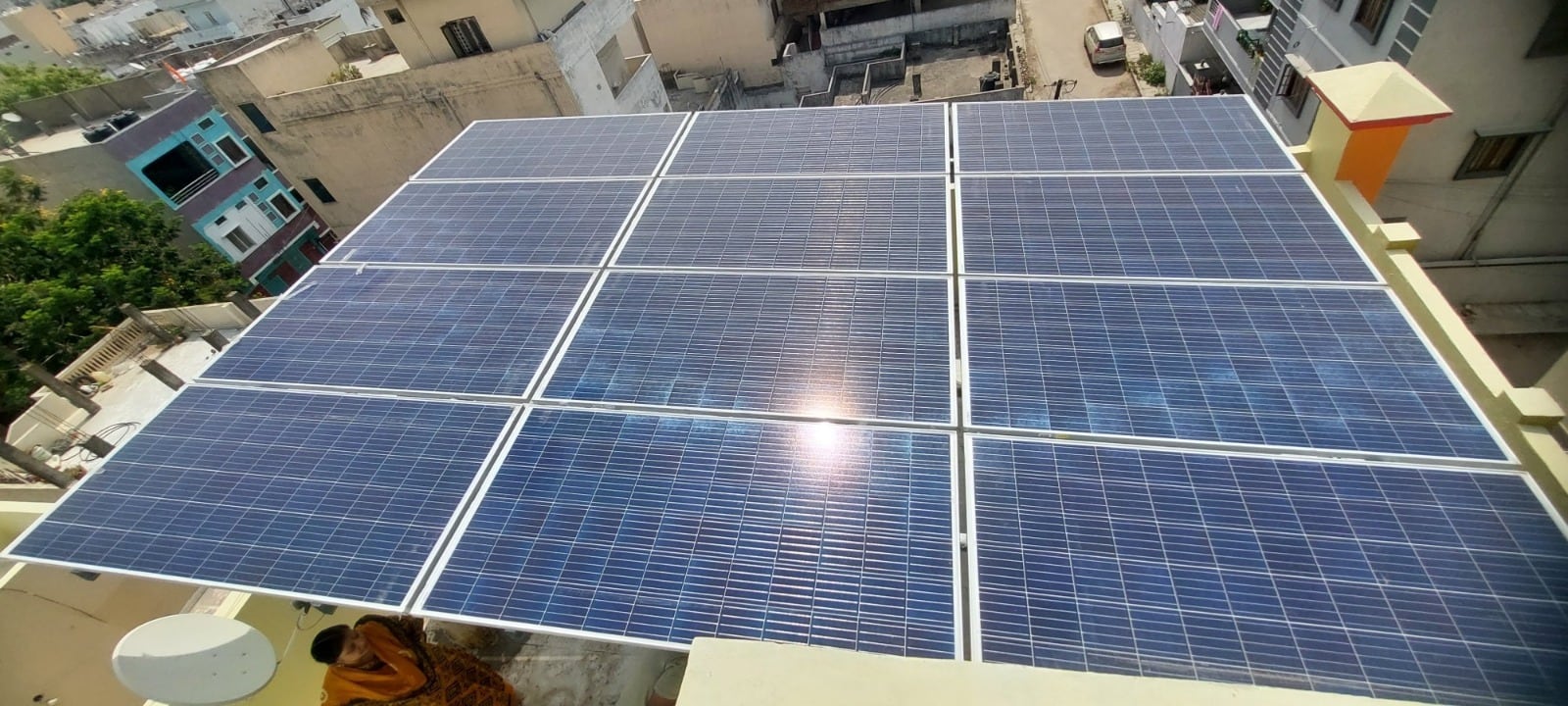
Large commercial buildings have unique advantages when it comes to adopting solar energy.
First, they have high and consistent electricity consumption, especially during daytime hours when solar panels generate the most power. This means most of the solar energy produced is consumed on-site, reducing reliance on the grid.
Second, these buildings often have large rooftop or open areas, perfect for rooftop solar for commercial buildings or ground-mounted systems. Parking structures can also be converted into solar carports.
Third, commercial electricity tariffs are higher than residential rates. Switching to industrial solar energy solutions helps businesses lock in lower energy costs for 25 years or more.
Types of Solar Energy Solutions for Large Commercial Buildings
1. Rooftop Solar Power Systems
Rooftop solar is the most common option for commercial buildings. Panels are installed on flat or sloped roofs of offices, malls, warehouses, and hospitals.
Best suited for:
-
Corporate offices
-
Shopping complexes
-
Hotels
-
Educational institutions
Advantages include space efficiency, lower installation cost, and minimal land requirements.
2. Ground-Mounted Solar Systems
When rooftop space is limited or structurally unsuitable, ground-mounted systems become the best option. These are common in factories, industrial campuses, and logistics parks.
They allow optimal panel tilt and orientation, resulting in higher energy generation compared to rooftop systems.
3. Solar Carports
Solar carports serve a dual purpose. They generate power while providing shaded parking. Many large commercial buildings use them to maximize unused parking areas.
This solution also enhances brand image and sustainability credentials.
4. Hybrid Solar Systems with Battery Storage
Hybrid systems combine solar panels with battery storage. Excess energy generated during the day is stored and used during peak demand or power outages.
This is ideal for hospitals, data centers, and facilities where uninterrupted power is critical.
Key Components of Commercial Solar Power Systems
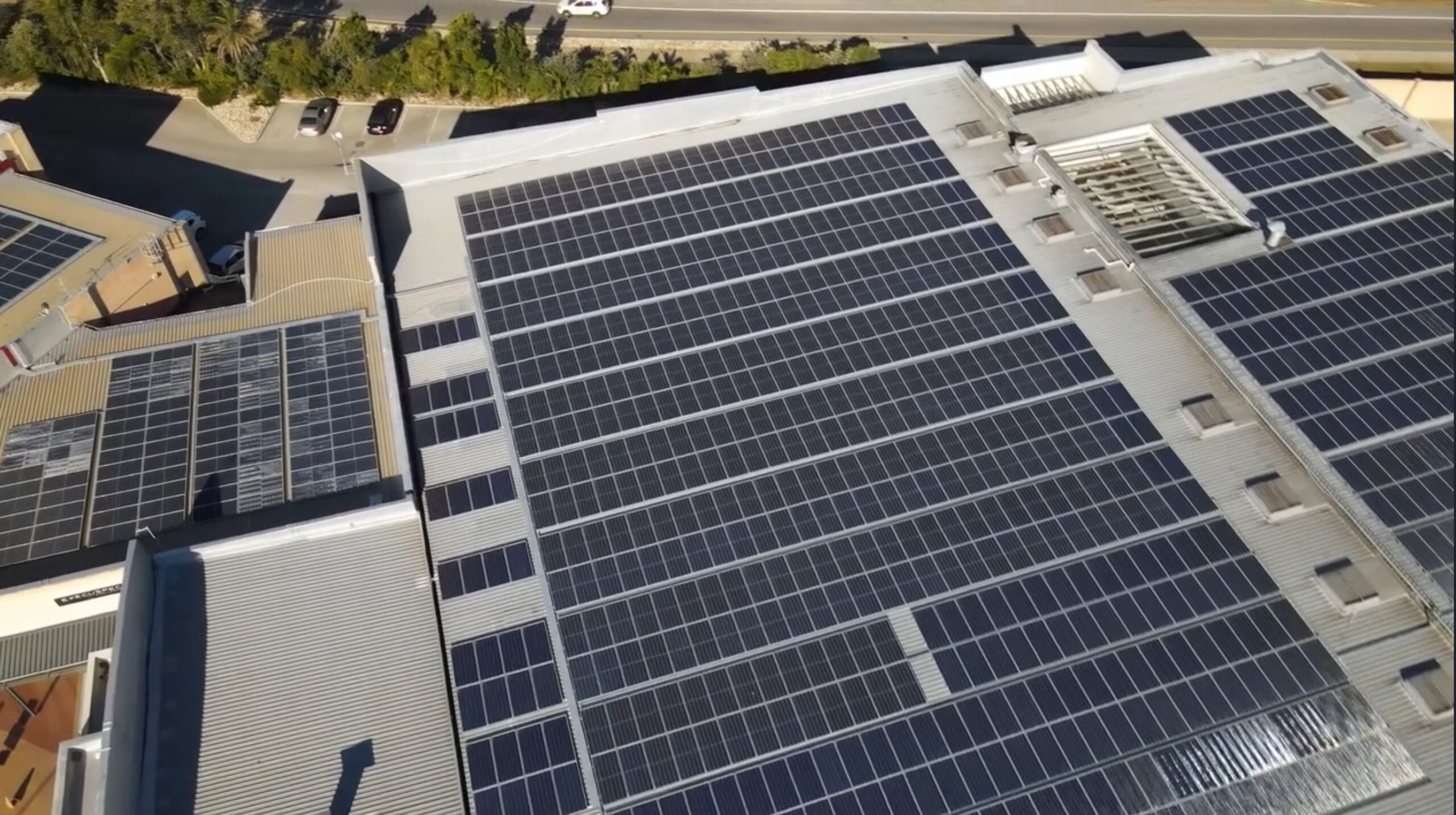
A professional solar installation includes:
-
Solar panels (monocrystalline preferred for higher efficiency)
-
Inverters (string or central inverters depending on system size)
-
Mounting structures designed for wind and load conditions
-
Electrical wiring and safety equipment
-
Monitoring systems for real-time performance tracking
For large-scale solar installations, system design and engineering quality play a major role in long-term output.
Benefits of Solar Energy Solutions for Large Commercial Buildings
1. Significant Reduction in Electricity Costs
One of the biggest advantages is cost savings. Solar power can reduce electricity bills by 40 to 80 percent, depending on system size and usage patterns.
With net metering policies, excess power exported to the grid further improves returns.
2. Strong Return on Investment (ROI)
Most commercial solar projects recover their cost within 3 to 6 years. After that, the electricity generated is virtually free for the remaining system life of 20 to 25 years.
This makes solar power for office buildings a stable, low-risk investment.
3. Energy Price Stability
Grid electricity prices increase almost every year. Solar locks in a fixed energy cost, protecting businesses from future tariff hikes.
4. Sustainability and ESG Compliance
Companies are under increasing pressure to meet environmental and ESG goals. Using industrial solar energy solutions reduces carbon emissions and improves sustainability ratings.
This also strengthens relationships with investors, clients, and regulatory bodies.
5. Brand Image and Market Advantage
Customers and partners prefer environmentally responsible businesses. A visible solar installation sends a clear message about long-term vision and responsibility.
Cost of Solar Energy Solutions for Large Commercial Buildings
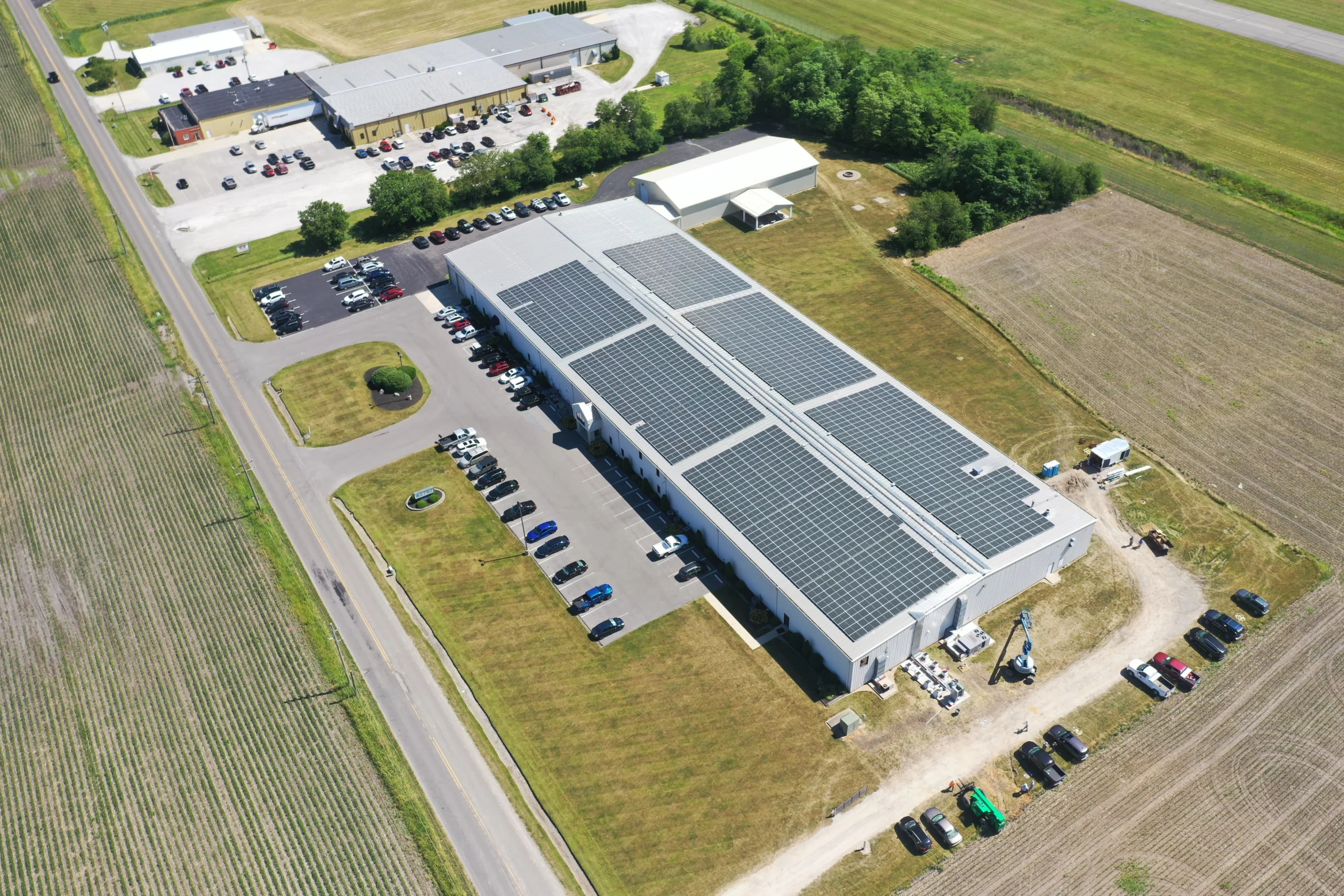
The cost depends on system capacity, location, panel type, and installation complexity.
Indicative cost range in India:
-
₹40,000 to ₹55,000 per kW for large-scale systems
For example:
-
100 kW system: ₹40–55 lakh
-
500 kW system: ₹2–2.5 crore
-
1 MW system: ₹4–5 crore
Government subsidies, accelerated depreciation, and tax benefits can significantly reduce the effective cost for commercial users.
Installation Challenges and How to Overcome Them
Structural Suitability
Older buildings may require structural audits before installing rooftop solar for commercial buildings. Reinforcement solutions usually solve this issue.
Shadow Analysis
Nearby buildings, HVAC units, or water tanks can cause shading. Proper design and layout planning minimize losses.
Regulatory Approvals
Large-scale solar installations require DISCOM approvals and net metering agreements. Working with experienced EPC providers simplifies compliance.
Operations, Maintenance, and Performance Monitoring
Solar Power for Commercial Buildings require minimal maintenance. Regular panel cleaning, inverter checks, and system monitoring ensure optimal output.
Most providers offer AMC contracts and remote monitoring dashboards, allowing facility managers to track energy generation and savings in real time.
Future of Solar Energy in Commercial Buildings
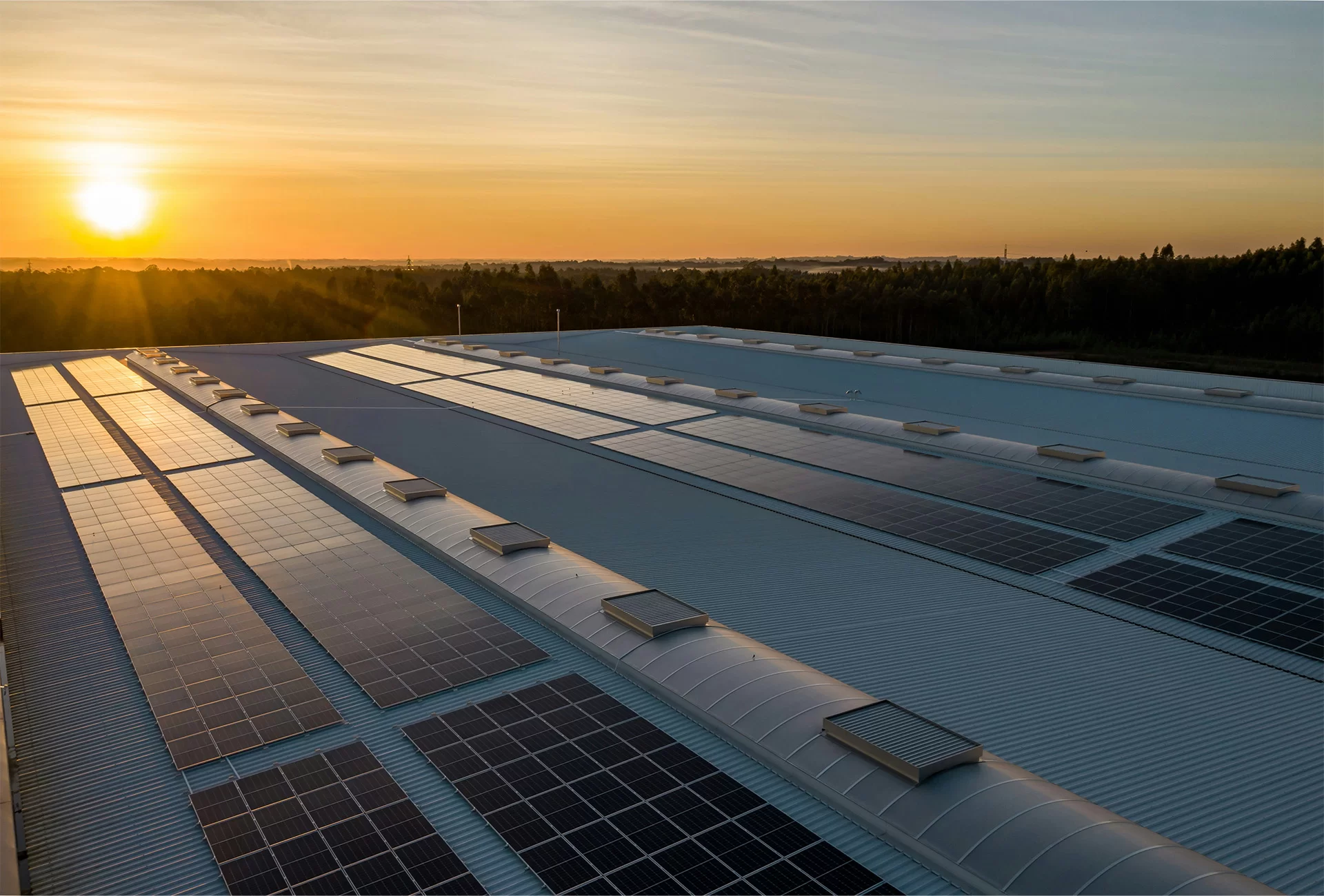
With smart grids, AI-based monitoring, and improved battery storage, solar adoption in commercial spaces is accelerating. Green building certifications and carbon regulations will further push demand.
For large commercial buildings, solar is no longer optional. It is becoming a standard infrastructure decision.
Frequently Asked Questions (FAQs)
1. How much rooftop space is needed for a commercial solar system?
On average, 1 kW requires 80 to 100 square feet of shadow-free space.
2. Can solar power run an entire commercial building?
Yes, with proper system sizing and hybrid storage, solar can cover most or all energy needs.
3. What is the lifespan of commercial solar panels?
Most panels last 25 to 30 years with gradual performance degradation.
4. Is solar energy reliable for large buildings?
Yes. Grid-connected systems ensure uninterrupted power, and batteries add extra reliability.
5. Are there tax benefits for commercial solar installations?
Yes. Businesses can claim accelerated depreciation and other tax incentives.
6. How long does installation take?
Typically 4 to 10 weeks, depending on system size and approvals.
7. Does solar increase property value?
Yes. Energy-efficient buildings with solar installations attract higher valuation and tenants.
8. What happens on cloudy or rainy days?
Solar generation reduces but does not stop. Grid power compensates for the shortfall.
Conclusion
Solar energy solutions for large commercial buildings are no longer a future concept. They are a proven, profitable, and responsible choice today. With rising energy costs, sustainability expectations, and technology improvements, commercial solar power systems deliver unmatched long-term value.
Whether it is rooftop solar for commercial buildings, ground-mounted systems, or hybrid setups, investing in solar means lower costs, stronger brand credibility, and energy independence. For businesses planning the next decade of growth, solar is not just an option. It is a smart foundation.