India is one of the fastest-growing renewable energy markets in the world. With the government pushing for massive solar capacity additions, utility scale solar EPC developers India are expanding rapidly. These developers design, construct, finance, and maintain large solar power plants ranging from 10 MW to 1 GW and even beyond.
Utility-scale solar projects have become the backbone of India’s clean energy transition. They support grid stability, reduce fossil fuel dependency, and help industries meet sustainability goals. With rising investments and advanced technologies, choosing the right utility scale solar EPC developer is now more important than ever.
This guide gives you a complete breakdown of the top EPC developers, the project development process, cost structure, quality standards, technologies used, and a detailed FAQ section.
Table of Contents
-
What Are Utility Scale Solar EPC Developers?
-
Why India Is Becoming a Hub for Utility-Scale Solar Projects
-
Key Services Provided by Utility Scale Solar EPC Developers
-
Top Utility Scale Solar EPC Developers in India (2025 Edition)
-
Project Development Process for Utility-Scale Solar Plants
-
Cost Structure and Pricing Breakdown (per MW)
-
Technologies Used in Large Solar Projects
-
Key Challenges and Solutions in Utility-Scale Solar Development
-
How to Choose the Best Solar EPC Partner in India
-
FAQs
-
Conclusion
What Are Utility Scale Solar EPC Developers?
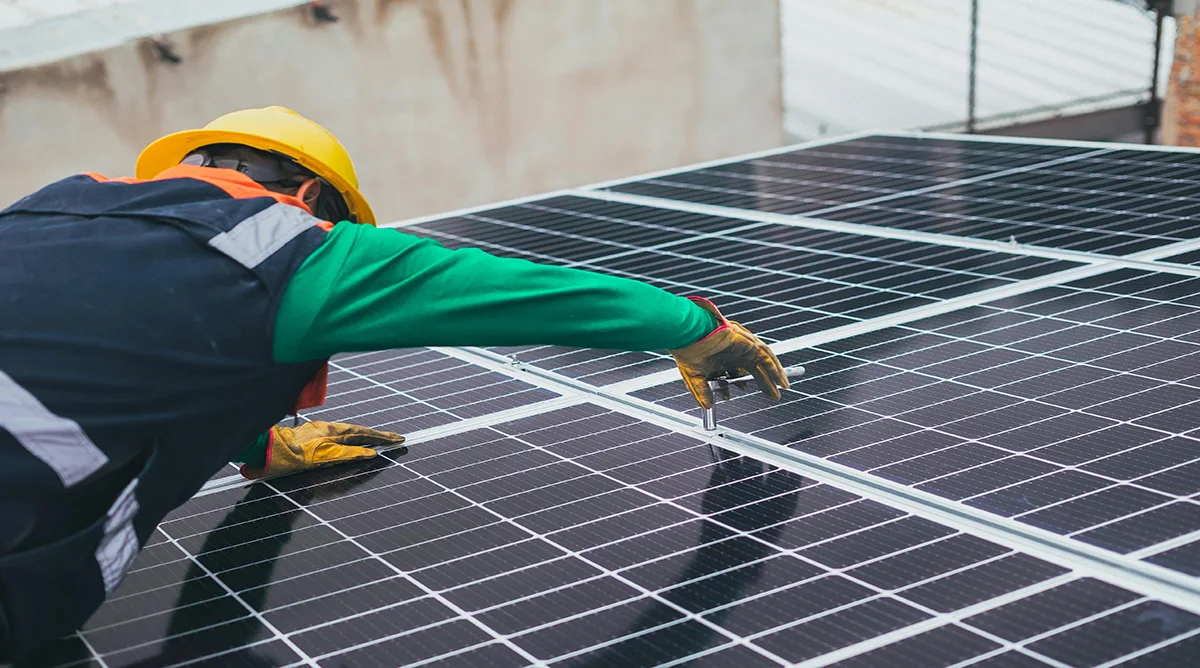
Utility scale solar EPC developers in India are companies that handle Engineering, Procurement, and Construction of high-capacity solar power plants, typically above 10 MW.
These projects include:
-
Ground-mounted solar farms
-
Solar parks
-
Large-scale PV power plants connected to the grid
-
Hybrid renewable systems (solar + wind + storage)
What Makes Utility Scale Solar Different?
Utility-scale solar projects are different from residential or rooftop systems because they require:
-
Land acquisition
-
High-voltage grid connectivity
-
Advanced engineering
-
Heavy civil construction
-
Major capital investment
Why EPC Developers Are Important
A reliable EPC partner ensures:
-
Lower project cost
-
Timely commissioning
-
High-quality equipment
-
Efficient plant performance
-
25+ years O&M support
This makes them essential for investors, IPPs, and government tender participants.
Why India Is Becoming a Hub for Utility-Scale Solar Projects
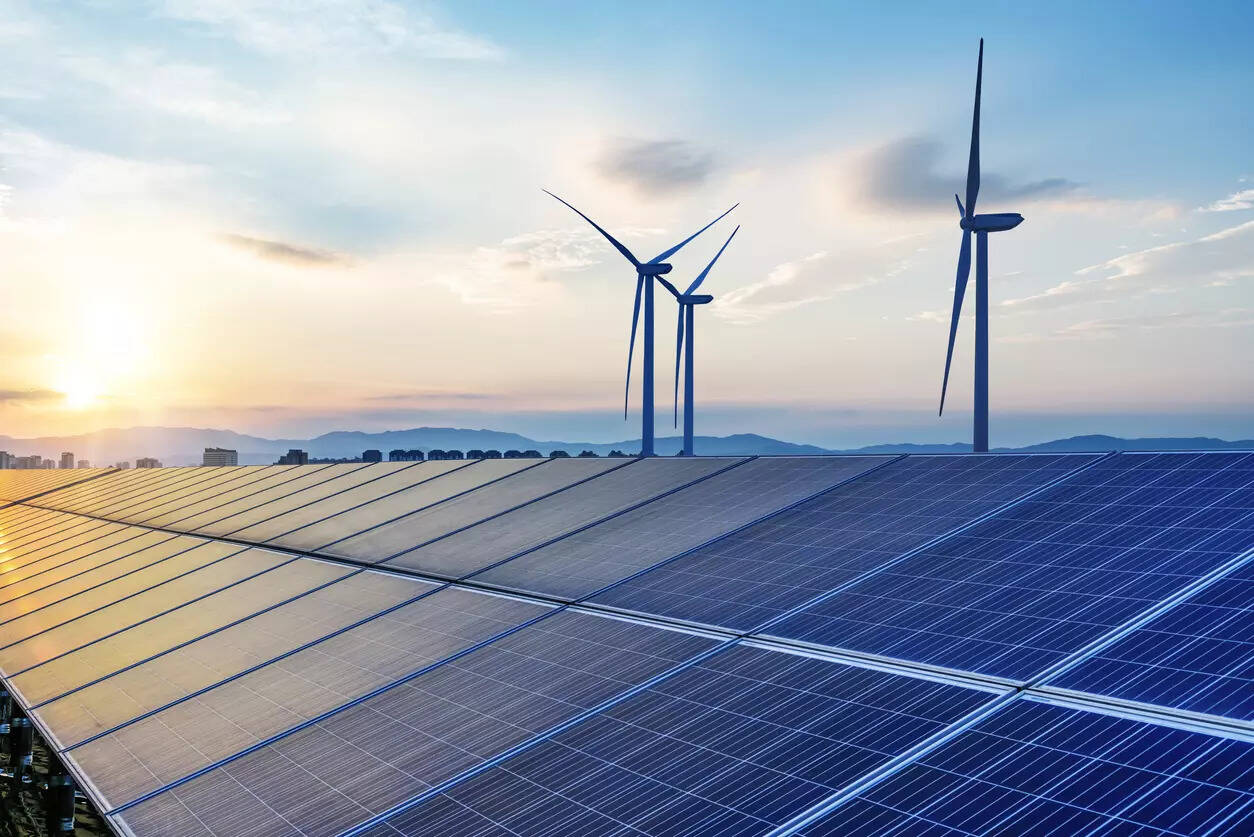
India crossed 74+ GW of solar capacity and aims for 300 GW by 2030, with most of it coming from utility-scale plants.
Government Policies Driving Growth
India’s renewable expansion is supported by:
-
Solar Park Scheme
-
ISTS Waiver
-
VGF for large solar projects
-
Green Energy Corridor projects
-
Production-linked incentives (PLI) for modules
Rising Investments
Major foreign and domestic investors prefer the Indian solar market because of:
-
Large land availability
-
Falling solar module prices
-
Increasing corporate PPA demand
All these factors boost the need for strong solar EPC developers India across states like Rajasthan, Gujarat, MP, Karnataka, and Maharashtra.
Key Services Provided by Utility Scale Solar EPC Developers
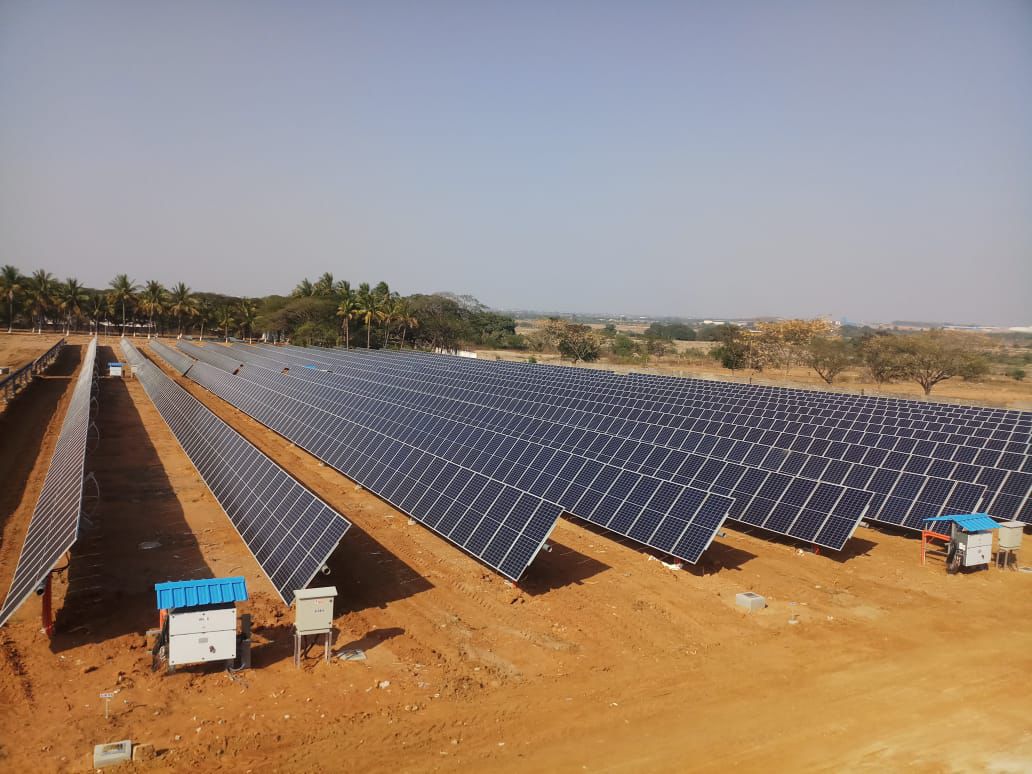
Utility-scale developers take responsibility from concept to commissioning.
Engineering Services
-
Site survey
-
Energy yield assessment
-
Soil testing
-
Electrical and structural engineering
-
Power evacuation design
Procurement Services
Developers procure:
-
Solar modules
-
Inverters
-
Structures
-
Cables
-
Transformers
-
Switchgear
-
SCADA systems
High-quality procurement ensures better plant performance for decades.
Construction & Commissioning
-
Civil foundation work
-
Module mounting
-
Transmission line construction
-
Substation installation
-
Grid sync and testing
O&M for 25 Years
Many utility scale solar EPC developers India also provide long-term O&M, including:
-
Module cleaning
-
String monitoring
-
Vegetation management
-
Preventive maintenance
This improves annual generation and reduces downtime.
Also Read: Top 10 Solar EPC Companies Near Me in Gurgaon: Complete List with Pros, Services & Established Year
Top Utility Scale Solar EPC Developers in India (2025 Edition)
Here are some of the leading players dominating the Indian utility-scale solar market.
1. Tata Power Solar
-
Over 12+ GW EPC portfolio
-
Strong in government tenders
-
High engineering quality
2. Adani Solar
-
One of the largest utility-scale developers globally
-
Strong in module manufacturing + EPC
3. Sterling & Wilson Renewable Energy
-
Global EPC presence
-
Expertise in desert and high-temperature installations
4. Mahindra Susten
-
Known for advanced project analytics
-
Strong O&M capabilities
5. ReNew Power
-
Major IPP with EPC expertise
-
Works on hybrid and storage projects
6. L&T Energy (Green Tech)
-
Heavy engineering expertise
-
Strong in transmission + solar EPC
7. Avaada Energy
-
Rapidly growing
-
Focused on green hydrogen + solar parks
Project Development Process for Utility-Scale Solar Plants
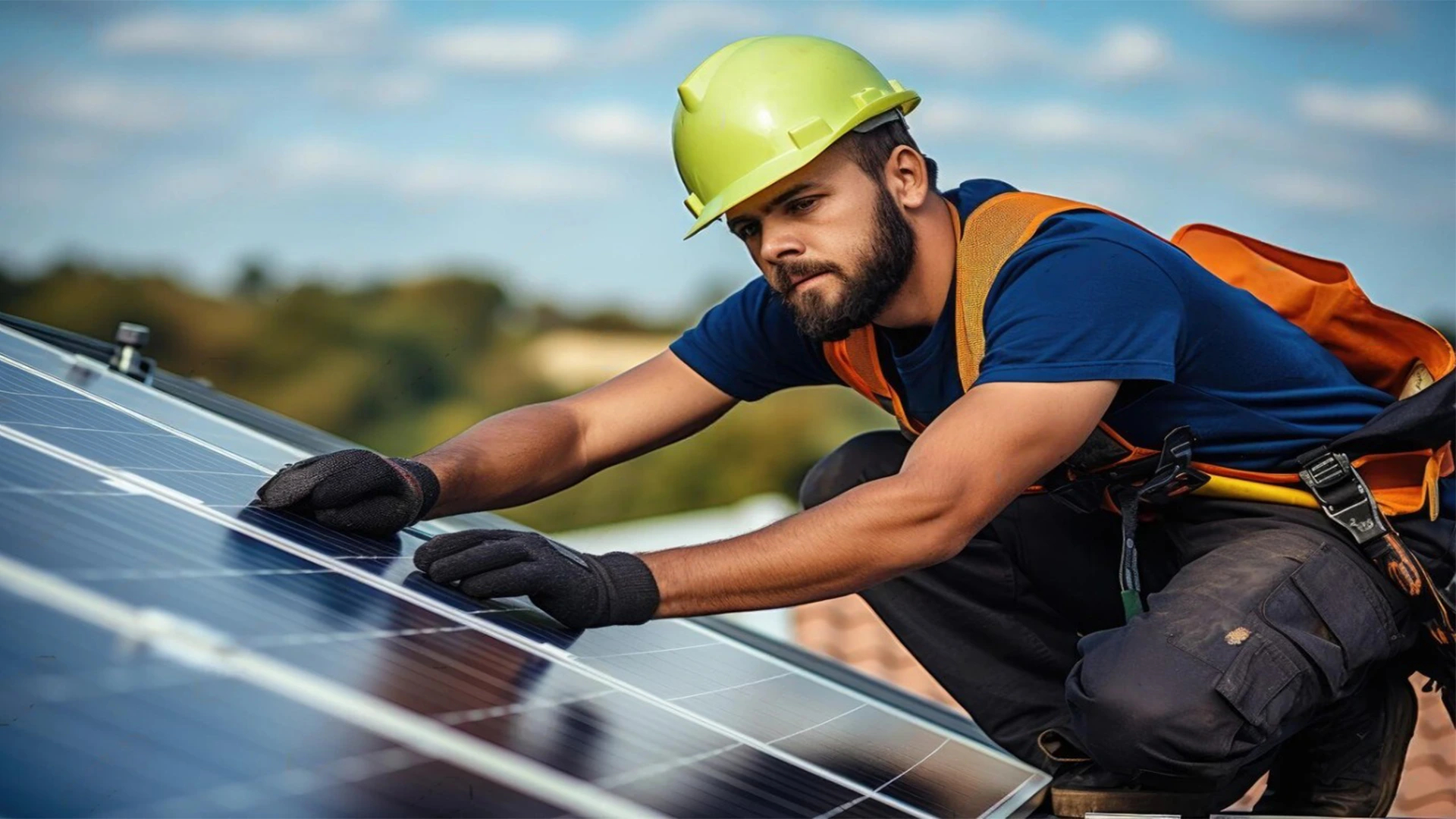
A well-defined process ensures timely commissioning and cost-effectiveness.
Step 1: Land Identification and Survey
Developers perform:
-
GIS mapping
-
Solar irradiance study
-
Soil testing
-
Boundary marking
Step 2: Detailed Project Report (DPR)
The DPR includes:
-
Energy yield calculations
-
Equipment selection
-
Cost analysis
-
Grid evacuation plan
Step 3: Approvals & Compliance
Includes:
-
Environmental clearance
-
Grid approval
-
Land conversion permits
-
DISCOM agreements
Step 4: Procurement and Logistics
Modules and equipment are transported to the site.
Step 5: Construction Work
-
Grading and leveling
-
Mounting structure erection
-
Cable trenching
-
Transformer installation
Step 6: Testing and Commissioning
Developers ensure:
-
Power evacuation readiness
-
Safety compliance
-
Load flow testing
Step 7: Handing Over & O&M
Plant operation training is provided to the owner.
Cost Structure and Pricing Breakdown (per MW)
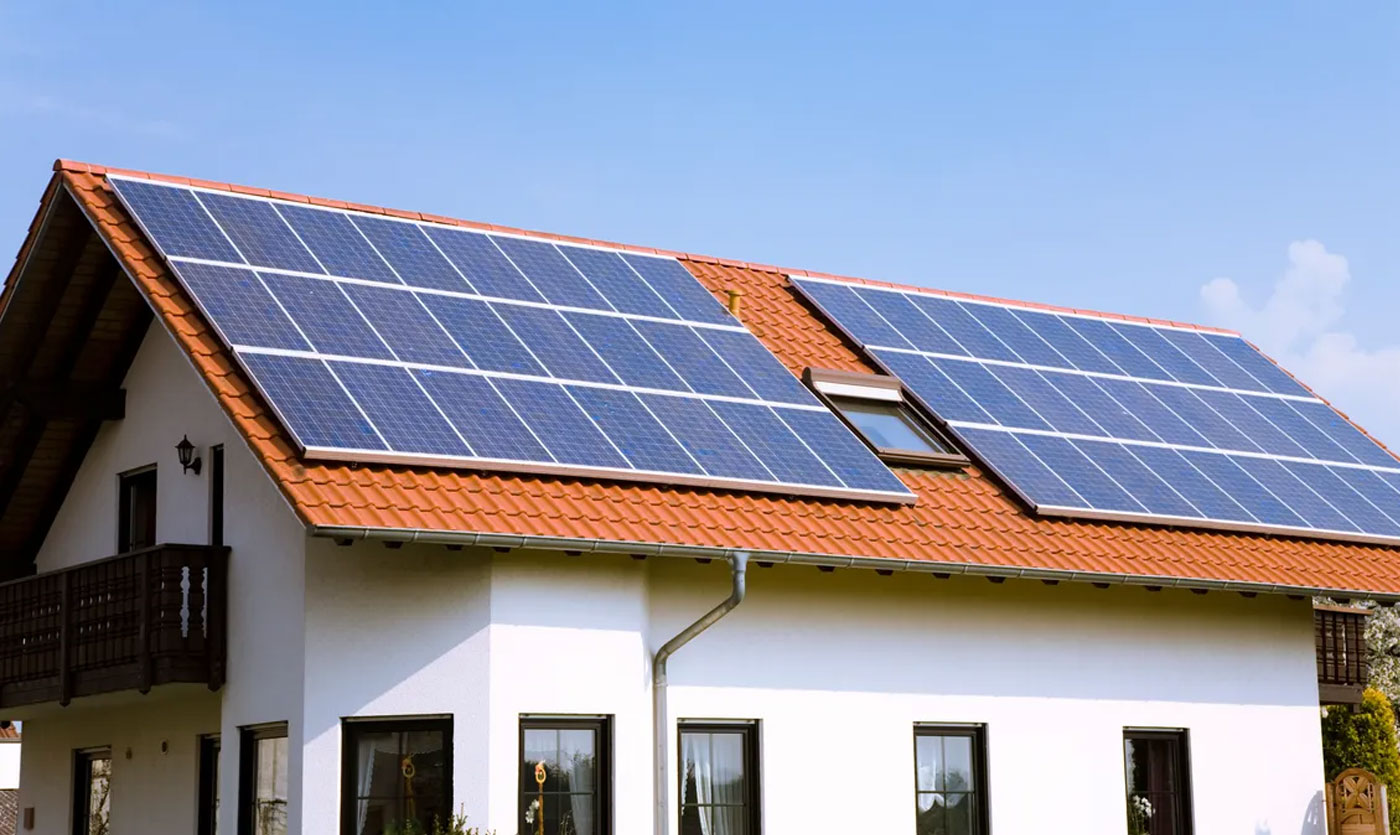
Major Cost Components
1. Solar Modules
50% of project cost
2. Inverters & Electrical Equipment
15–18%
3. Civil & Structural Work
15–20%
4. Evacuation & Transmission
5–7%
5. EPC Margin & Contingency
3–5%
Factors Affecting Cost
-
Module technology (poly, mono, bifacial)
-
Land cost
-
Transmission distance
-
EPC developer experience
-
Project location (desert, hilly, coastal)
Technologies Used in Utility-Scale Solar Projects
Bifacial Modules
Increase generation by 8–12%.
Solar Trackers
Single-axis trackers boost energy output by 15–20%.
SCADA & Remote Monitoring
Real-time performance tracking for 25 years.
Robotic Cleaning Systems
Reduce water usage and improve efficiency.
HVDC & Smart Inverters
Enable better grid stability in large installations.
Key Challenges & Solutions
1. Land Acquisition Issues
Solution:
Developers prefer solar parks with pre-approved land.
2. Grid Congestion
Solution:
Use advanced forecasting and smart inverters.
3. Module Price Fluctuations
Solution:
Long-term supply contracts with Tier-1 manufacturers.
4. Environmental Concerns
Solution:
Low-impact construction and biodiversity protection.
How to Choose the Best Solar EPC Partner
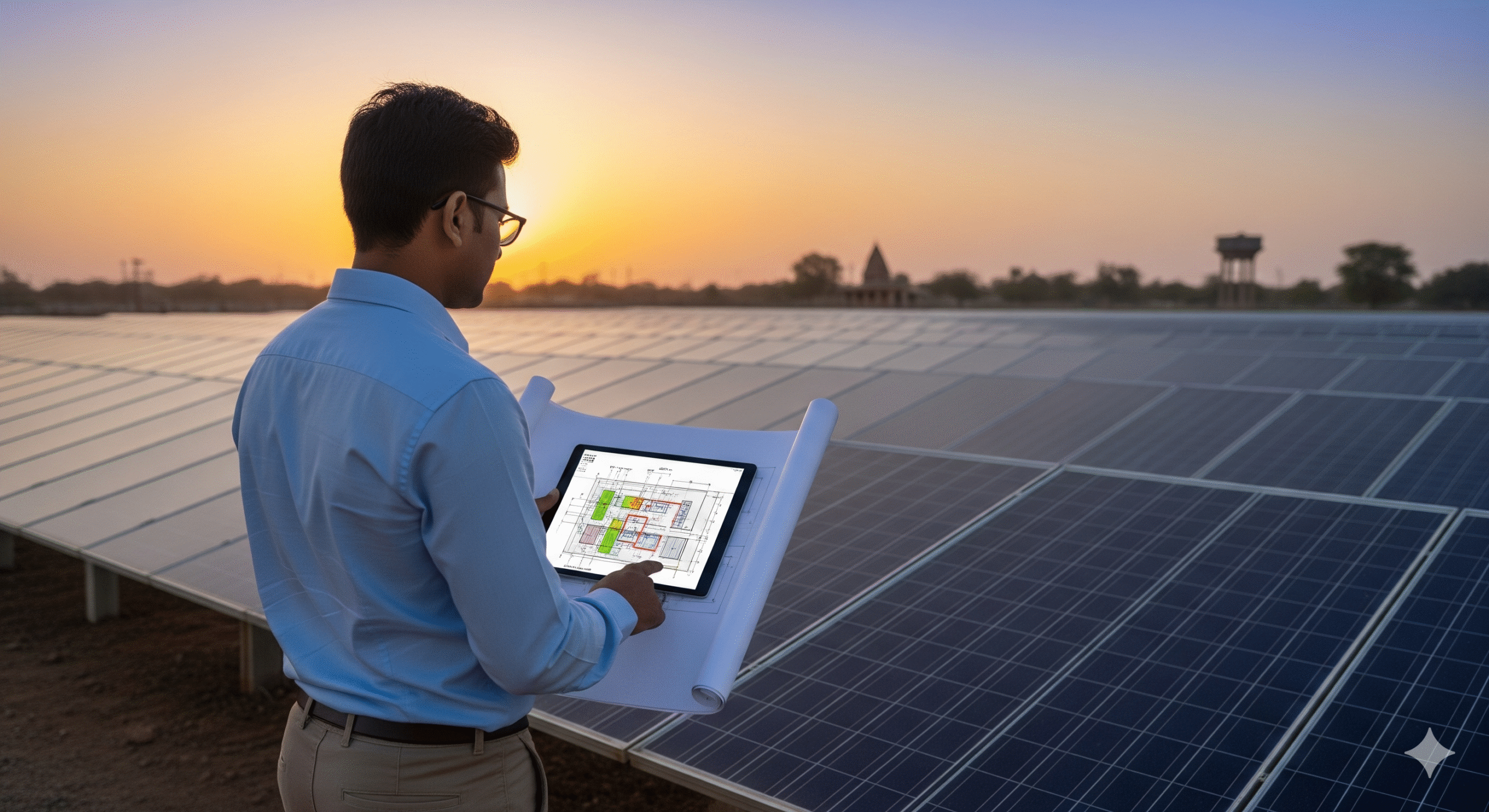
Key Selection Criteria
-
Proven experience in projects above 100 MW
-
Strong procurement network
-
Robust engineering team
-
Financial stability
-
Solid O&M track record
Checklist Before Finalizing
✔ Ask for generation reports
✔ Visit past project sites
✔ Compare warranties and SLAs
✔ Check inverter and module brands
✔ Evaluate long-term O&M capability
FAQs About Utility Scale Solar EPC Developers India
1. What is a utility-scale solar plant?
It is a large ground-mounted solar project connected directly to the grid, usually above 10 MW.
2. What do EPC developers do?
They handle engineering, procurement, construction, commissioning, and long-term O&M.
3. How much does a utility-scale solar plant cost in India?
Approximately Rs. 3.2–4 crore per MW.
4. How long does it take to build a 100 MW solar project?
Typically 6–12 months depending on land conditions and approvals.
H3: 5. Which states are best for utility-scale solar?
Rajasthan, Gujarat, Karnataka, Andhra Pradesh, Tamil Nadu, Maharashtra.
6. What is the lifespan of a solar power plant?
25–35 years with proper O&M.
7. Which modules are best for large solar farms?
Mono PERC or bifacial modules for higher efficiency.
8. Do utility-scale projects require trackers?
Trackers are optional but helpful in increasing energy yield.
9. What is the role of SCADA?
It monitors plant performance and identifies faults quickly.
10. Can industries buy power from utility-scale developers?
Yes, through corporate PPAs and open access.
Conclusion
India’s shift toward clean energy is accelerating, and utility scale solar EPC developers India are leading this transformation. From engineering to long-term maintenance, these developers ensure seamless execution of mega solar projects that support national energy goals and corporate sustainability targets.
With new technologies like bifacial modules, trackers, automation, and AI-based monitoring, the solar EPC industry is evolving rapidly. Choosing the right EPC partner ensures high generation, lower LCOE, and long-term project success.
If you’re planning to invest, participate in tenders, or develop a large solar plant, this guide should give you clarity on the process, costs, and best companies to work with.